
Drone vs Rope Access: Cost Comparison
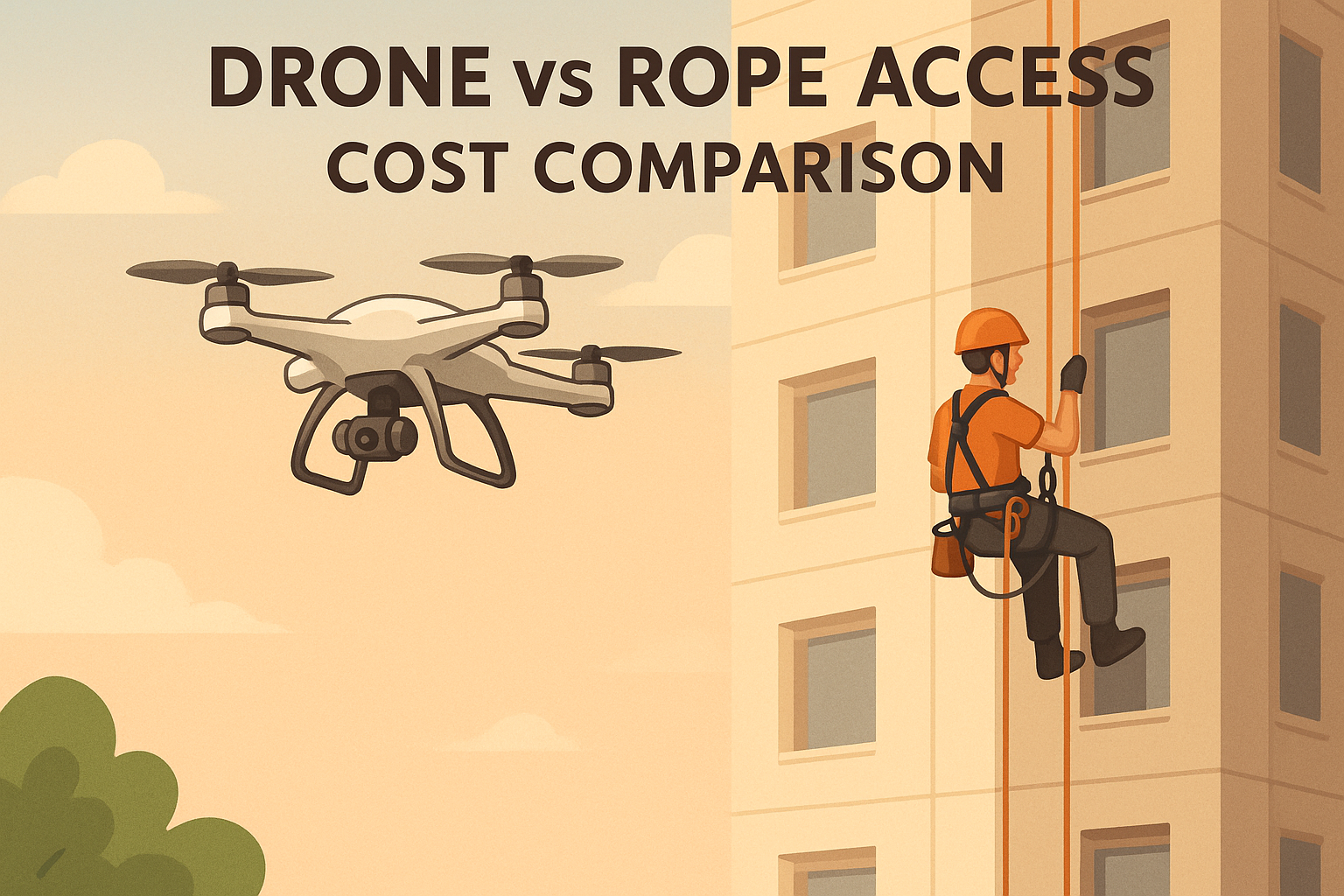
Drones save you money and time for high-rise maintenance in Hong Kong. They reduce costs by 40%, complete tasks 5x faster, and eliminate the need for risky height work. Rope access, while reliable, is slower, labour-intensive, and requires more setup.
Key Takeaways:
Cost Savings: Drones cut labour and equipment costs by 40%.
Speed: Drones clean 800m²/hour, 5x faster than rope access.
Safety: No height risks for workers with drones.
Setup: Minimal setup for drones vs extensive rigging for rope access.
Coverage: Drones reach confined spaces and tall façades with ease.
Quick Comparison:
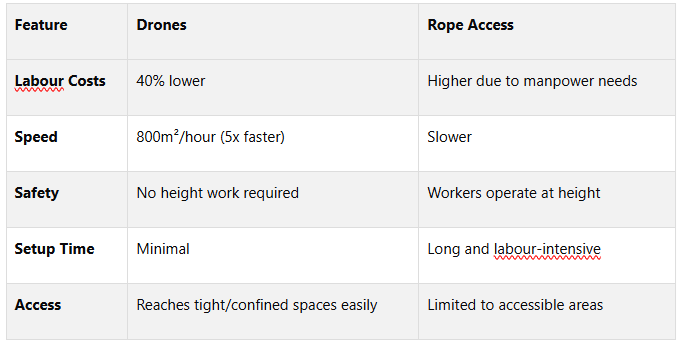
Drones are transforming high-rise maintenance in Hong Kong, offering faster, safer, and more cost-effective solutions for inspections and cleaning.
Cost Breakdown: Drones vs Rope Access
Equipment and Setup Expenses
The upfront cost of drone systems is higher compared to rope access. Rope access setups include harnesses, ropes, anchors, and protective gear, while drones require specialised hardware and software. However, for high-rise maintenance in Hong Kong, drones can reduce the frequency of equipment replacement, offering a practical advantage over traditional methods. Let’s delve into staffing and operational costs to better understand the overall expense.
Staff and Operating Costs
Rope access typically involves a team of skilled technicians, rigorous safety protocols, and frequent equipment inspections. On the other hand, drone operations are more streamlined, often requiring fewer personnel to cover larger areas. This efficiency in staffing contributes to long-term cost advantages, as outlined in the next section.
Cost Savings Over Time
For high-rise maintenance in Hong Kong, saving money without compromising quality is crucial. Over time, drones offer notable financial advantages in several areas:
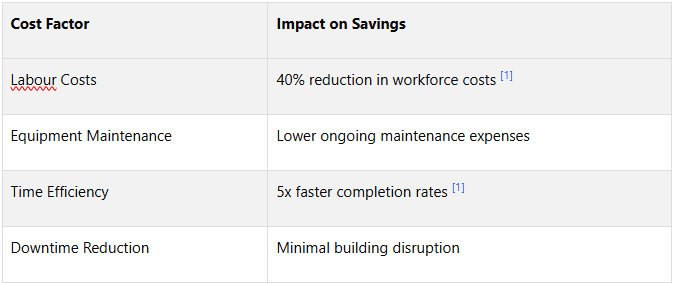
Drones eliminate the need for scaffolding and significantly reduce setup time, leading to major cost savings [1]. For Hong Kong’s high-rise buildings, this translates to shorter project timelines and less inconvenience for residents. The combination of faster completions and fewer required personnel results in a 40% overall reduction in maintenance costs [1].
Safety and Performance Analysis
Risk Reduction Methods
Safety is a top priority when it comes to maintaining Hong Kong's skyscrapers. Drone technology has changed the game by removing the need for workers to operate at dangerous heights.
Drone operators in Hong Kong adhere to strict Civil Aviation Department (CAD) safety standards. Drone Solutions Asia highlights this commitment:
"We partner only with qualified drone operators who follow strict safety standards and meet the regulatory requirements in the country of operation" [1]
This rigorous approach to safety not only reduces risks but also improves the speed and quality of maintenance operations.
Work Speed and Results Quality
Drones offer more than just safety improvements - they are also incredibly efficient. Compared to traditional rope access, drones can cover up to 800m² per hour, completing tasks five times faster [1].
This speed translates to better results through:
Consistent Coverage: Automated flight paths ensure every area is inspected.
Advanced Imaging: Tools like thermal imaging and photogrammetry provide detailed insights.
Real-Time Monitoring: Live visuals allow for better oversight during operations.
Digital Documentation: Comprehensive digital records create a clear audit trail.
"Elevate your exterior cleaning with our drone-based approach, delivering up to 5 times the speed of traditional methods and cleaning as much as 800m² per hour, while saving an average of 40% on costs." [1]
Resource Usage and Work Capabilities
Resource Management
Using drones for maintenance drastically cuts down on material and energy consumption. Here's a comparison of the resources needed:
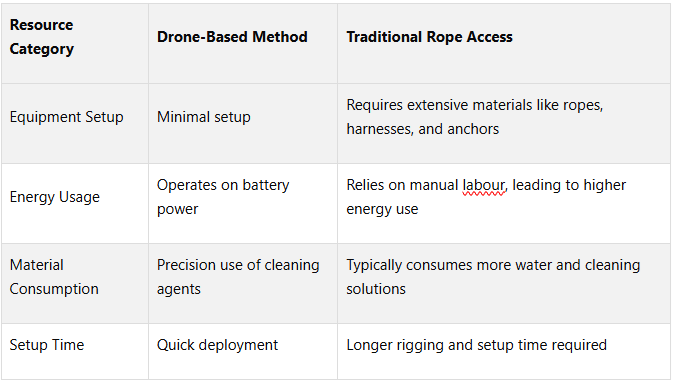
This approach not only reduces waste but also aligns well with the needs of Hong Kong's dense urban landscape. Beyond saving resources, drones offer distinct advantages when it comes to reaching difficult areas.
Access and Range
Drones excel at accessing locations that are challenging for traditional rope access methods. Here's how they measure up:
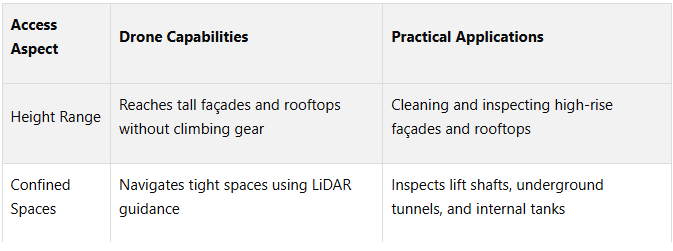
For example, the ELIOS 3 indoor UAV features a collision-tolerant frame and LiDAR technology, making it ideal for navigating confined spaces like lift shafts and underground tunnels [1]. These capabilities not only cut down on delays but also improve overall maintenance efficiency.
With their ability to cover tall façades, tight spaces, and other hard-to-reach areas, drones are proving to be a highly effective solution for maintaining Hong Kong's high-rise buildings [1].
Conclusion and Future Outlook
Main Findings
Drone inspection methods clearly outperform traditional rope access when it comes to cost and efficiency. Here's a breakdown of the advantages:
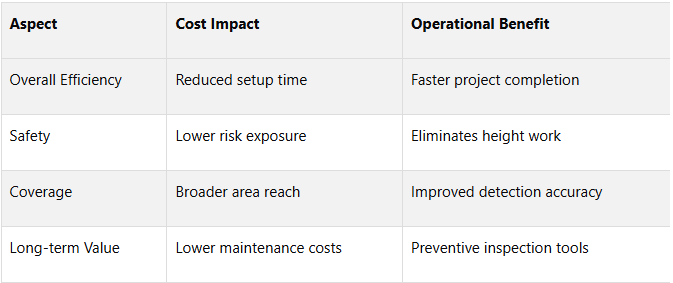
compelling example is Sino Estates Management, which reduced inspection time per building from 4 weeks to just 5 days, all while cutting labour costs by 35%. These results highlight the growing role drones play in revolutionising high-rise building maintenance.
Next Steps in Drone Technology
The next wave of drone advancements focuses on autonomy and AI-driven solutions, further enhancing their role in high-rise maintenance. One standout innovation is the "Drone in a Box" system, which allows for automated, scheduled operations without requiring constant human intervention.
Key advancements include:
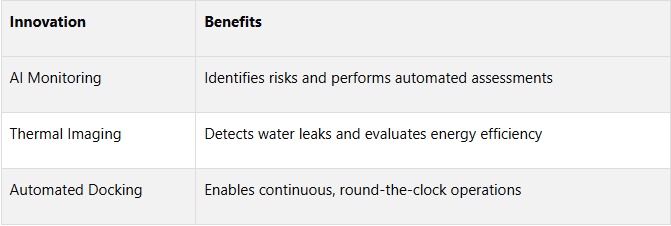
These technologies are particularly well-suited for Hong Kong's dense urban environment, addressing logistical challenges while increasing efficiency. By combining AI and automation, drones are not only reducing costs but also raising safety and operational standards. It's clear that drone technology is reshaping the future of high-rise maintenance in Hong Kong.